
Introduction:
Preimplantation Genetic Testing for Monogenic Conditions (PGT-M) is a type of genetic test that can be done on embryos created through IVF. It helps people who are at a high risk of having a child with an inherited genetic disease reduce the chance that the disease will get passed on to their future children. But the decision to do PGT-M is not always an easy one. There are a lot of steps involved, and it can be hard to know what to expect along the way. In this article we’ll break all those steps down for you so it doesn’t feel as overwhelming.
Who is PGT-M For?
There are different types of testing that can be done on embryos created through IVF, but PGT-M is a very specific type. PGT-M is specifically for individuals and couples who are at a high risk of having a child with a genetic condition. This might be because they themselves have a genetic condition, a family member has a genetic condition, or because they did a genetic test before pregnancy, like carrier screening, that showed their future children were at a high risk of a genetic disease. It is important to know that PGT-M tests for small changes (mutations or variants in the DNA, also called monogenic conditions (this is what the M in PGT-M stands for). PGT-M is different from PGT-SR, which is used for people who have chromosome rearrangements like balanced translocations or inversions.
The PGT-M Process
PGT-M will test your embryos for the specific genetic variant(s) that you and/or your partner have in your DNA that are related to the genetic condition in question. Since this is more specific than other types of PGT that are more general, this means the test is custom designed to you and your DNA. Because of this, there is an in depth test design process that takes place before IVF. This involves meeting(s) with the laboratory that will test your embryos, sending the lab your genetic test report(s), collecting DNA samples from yourself and your family members, and more. To help you understand the process we’ll break down all of these steps in detail.
● Step one: Meet with your fertility clinic. You need to be set up with a fertility clinic that does IVF in order to do PGT-M. IVF clinics do not usually do the PGT-M themselves, but they work with laboratories that specialize in embryo genetic testing to help make PGT-M possible. Your clinic will help you get in touch with the PGT-M laboratory that they work with to start the process.
● Step two: Submit paperwork, including your genetic test report(s) to the PGT-M laboratory. The PGT-M lab needs to see the exact genetic changes that are responsible for the genetic disease you want to test for. They use your test reports to assess whether they are capable of doing the test for your family or not. If you’ve been told that the disease in yourself or your family member is genetic, but the exact variation in the DNA that causes the condition has not been identified (genetic testing hasn’t been performed), this will need to take place before PGT-M is possible. Genome Ally can help with this if needed. Just have the person who needs testing set up a new patient appointment and we’ll handle things from there. Please note that standard appointment and testing fees apply. At Genome Ally, we provide PGT-M case submission and coordination services. We prepare the documentation required and submit the case to the PGT lab. Once the laboratory has your report they will review it. This takes approximately 1-2 weeks.
● Step three: Meet with a genetic counselor from the PGT-M laboratory. After completing some additional paperwork you will have an appointment with a genetic counselor from the PGT-M laboratory. They are experts at the details of the PGT-M process and will tell you exactly what to expect for your specific case. Different labs have different processes and timelines so this is where you will learn exactly what to expect for your case. Depending on the laboratory they may ask you questions about your family members health history, and who in your family has the genetic condition or who has done genetic testing. They may also set you up to learn more about PGT-A, another embryo test that can be done at the same time as PGT-M.
● Step four: Payment. At this part of the process payment for some part of PGT-M is usually required. This shows the laboratory that you are committed to proceeding with PGT-M before they start the test design process. At this stage you are usually only required to pay the “PGT-M test design” fee. You do not yet have to pay your fertility clinic for your IVF cycle itself, and do not have to pay for individual embryo testing. You usually only have to pay the PGT-M test design fee once. If you do more than one IVF cycle, this fee doesn't have to be paid again.
● Step five: Collection of DNA from yourself and family members. PGT-M will test for the genetic change(s) that cause the disease you are screening for. But testing DNA from an embryo has limitations. To increase the accuracy of testing, PGT-M laboratories prefer to also test for DNA markers that are located above and below the gene of interest. In order to identify those markers, DNA samples from your relatives are needed. Which relatives are needed will depend on your specific case, but parents, children (if applicable) or siblings are commonly used. The PGT-M laboratory will send a saliva collection kit to the relevant people. The kit will include easy to follow instructions for submitting a saliva sample (or cheek swab) and shipping the kit back to the lab at no cost to them. It usually takes about 1 week to receive kits. We’ll talk more about what happens if family members aren’t available below.
● Step six: PGT-M test development. Once everything has been received, the lab will work to create your PGT-M test. Nothing more is needed from you at this time. This step can take 3-12 weeks. It is important to be aware that not everyone can have a test made. Some variants are easier to test for than others. At various steps in the process above you may learn that PGT-M is not possible for you.
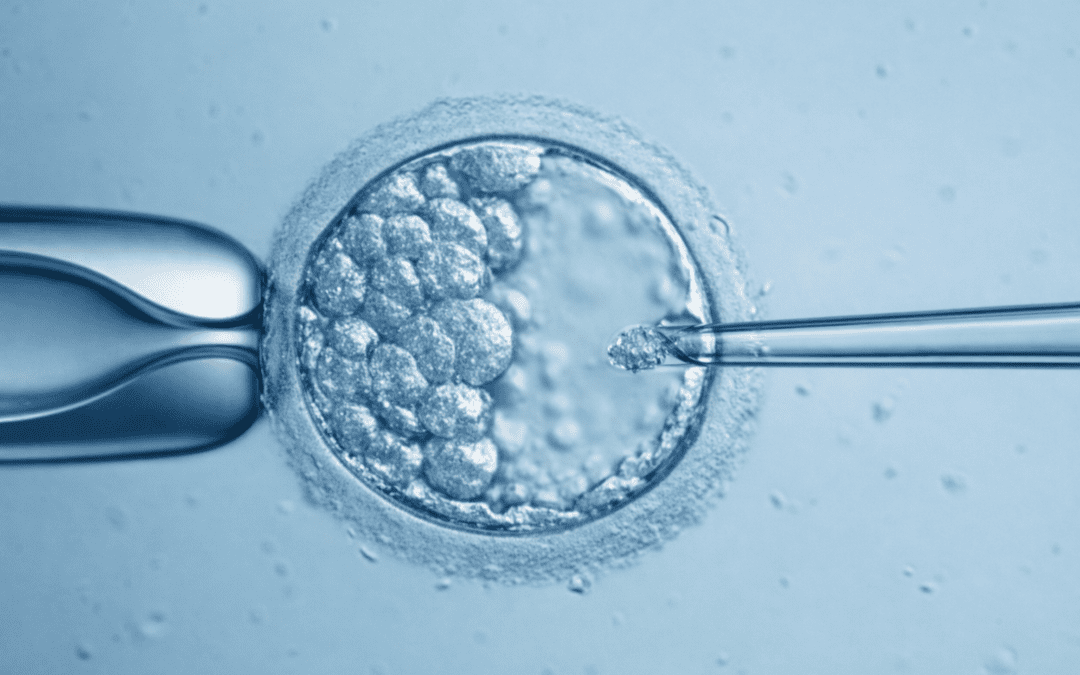
● Step seven: IVF and embryo biopsy. Once your test is ready, your clinic will be notified that you can move forward with IVF. Depending on your specific situation this may involve an egg retrieval. Eggs will be fertilized and embryos will be grown to a specific stage of development referred to as the blastocyst stage. Embryos are grown to this specific stage because at this time, an embryologist can visualize under the microscope which part of the embryo will become the placenta, and which part will become the fetus if a pregnancy occurs. To do PGT-M, 5-10 cells are removed (biopsied) from the trophectoderm, the part of the embryo that would develop into the placenta. The part of the embryo that would develop into the fetus is not touched, which helps keep the embryo safe. Biopsy samples are packed up safely and shipped to the PGT-M laboratory for testing. Your embryos are frozen and stored safely at your fertility clinic. The embryos do not leave your fertility clinic as part of this process.
● Step eight: PGT-M results. It usually takes about 15 days for PGT-M to be performed and for results to be sent back to your fertility clinic. Waiting is such a hard part of the process! Talk to your fertility clinic about how you will receive your results. If you have questions about your PGT-M results, Genome Ally can help you make sense of them.
● Step nine: Embryo transfer. Based on the results, if you have an embryo that meets your criteria you will proceed with an embryo transfer. This often involves taking medications, and trips to your fertility clinic. Then at a specific time, the embryo is put into the uterus of the person who will be carrying the pregnancy, and will hopefully lead to a pregnancy and healthy live birth.
● Step ten: Genetic testing in pregnancy. PGT-M is highly accurate, but no test is 100%. It is usually recommended that you do additional genetic testing in pregnancy to confirm that PGT-M was accurate and that your pregnancy does not have the genetic condition in question. You can speak with a genetic counselor before or during pregnancy, or speak to us at Genome Ally to learn more about your testing options.
What if my family members aren’t available?
We talked about how family member DNA is collected for the test design phase of PGT-M. But what if your family members aren’t available? There are a lot of reasons that this can happen, and in these cases, the “no family member” method of PGT-M test design can be considered. It has its pros and cons, so we’ll walk through some of them now.
As we reviewed, family member DNA is used so that markers above and below the gene you are testing for can be identified. These markers are tested in addition to the specific variant that causes the disease, increasing the accuracy of testing. When family members aren’t available to contribute DNA as part of test design, the DNA from arrested embryos created during your IVF cycle, and DNA from biopsied embryos can be used instead. An arrested embryo is an egg that fertilizes, but stops growing on its own. It is normal and expected that not all fertilized eggs will grow into embryos that are testable and considered for transfer. On a genetic level, embryos created during IVF are siblings to one another and are related to you. They will have the genetic markers of interest. By using this genetic material the same information can be obtained that would have been seen in your family members, and the test can be designed.
There are a few limitations and considerations with the “no family member” method of PGT-M test design. This method means that you will undergo your IVF cycle before the PGT-M test is designed. A certain number of arrested embryos and biopsy samples are needed in order for the test to be designed, usually at least 4-6. This is because the embryos need to inherit certain markers in the right frequency. If the genetic status of all embryos is identical, meaning there isn’t enough genetic variation in the embryos used for the test, this might mean that the PGT-M test can’t be designed. In this scenario you would have done IVF, embryo biopsies would have been taken, but PGT-M wouldn’t be possible, or the results would have a reduced accuracy. There may be the opportunity to undergo another round of IVF to gather more embryo samples and ultimately test all embryos from both cycles once the PGT-M test can be designed. But the main drawback of this method is that the PGT-M test has not been designed before IVF, so there is no guarantee that testing will be possible on the embryos that are created.
What is the cost of PGT-M?
Specific costs vary depending on your fertility clinic and insurance coverage, but there are typically three main parts of the process where payment is required. The first part is reviewed above: the PGT-M test design phase. This covers the creation of the PGT-M test and the logistics involved. Payment is made to the PGT-M laboratory. The second is the cost of IVF itself. There are many smaller costs to this that your clinic can explain to you. This includes medications, egg retrieval (if applicable), egg fertilization and growing embryos in the laboratory (IVF itself), and trophectoderm biopsy. You will also likely have to pay fees to store frozen embryos. Finally there are fees to test the embryos themselves. Depending on the agreement set up with the PGT-M laboratory and your clinic, this might be a per-embryo fee, or a flat fee for all embryos tested.
What about PGT-HLA?
PGT-HLA is a sub-type of PGT-M that involves testing for the human leukocyte antigen. This is often done when an individual or couple has a child or relative that is sick with a disease that could be treated with a bone marrow or stem cell transplant. In order for a person to be a candidate to be a transplant donor, their HLA needs to be compatible with the recipient. PGT-HLA allows the individual or couple undergoing IVF to test their embryos for HLA and then prioritize transferring an embryo that would lead to the birth of a child who is a compatible donor. If applicable there is also the option to do PGT-M for the condition the person may be sick with, if it is genetic.
What are non-disclosure and exclusion PGT-M?
Some individuals know that they have a genetic condition in their family, and don’t want the condition to be passed on to their future children, but also do not want to know if they themselves have the condition. This is common for neurodegenerative conditions like Huntington’s Disease and ALS. In these cases, non-disclosure PGT-M or exclusion PGT-M may be used.
With non-disclosure PGT-M, embryo testing is performed and the PGT-M laboratory would know whether the person has the condition or not, but would not reveal this to them. Appropriate consents would be signed so that this information would be withheld. PGT-M would be done and information regarding the embryos’ status would be communicated accordingly so that the patient does not learn their own genetic status. Embryos that inherit the genetic variant (if applicable) would be excluded from transfer. The benefit of this strategy is that only necessary embryos are excluded from transfer. The downside is that it is possible for the individual to accidentally learn their genetic status. For example if no embryos end up being available for transfer, they may assume they have the genetic condition in question, even if that isn’t the reality.
Exclusion PGT-M is a bit more common in these cases since the genetic status of the individual is not known by the laboratory. Instead, the lab determines which copy of the chromosome was inherited from the relative that has the condition. Embryos that inherit that chromosome are excluded from transfer. The limitation is that embryos excluded from transfer may not be at risk of the condition. This is because the chromosome copy may be the one with the disease-causing gene, or it may be the one with the healthy gene. The benefit is that the genetic status of the individual isn’t known by anyone and so there isn’t the risk that it is accidentally disclosed.
Still have questions about PGT-M?
At Genome Ally we are experts in PGT-M, including complex cases. If you’ve been told that your condition or genetic change can’t be tested for using PGT-M, that may not be the case. It might just be that the PGT-M laboratory usually used by your clinic can’t help, but a different one could. We work with all PGT-M laboratories in the United States. Get in touch and we’ll see if we can help find a lab that works for you.